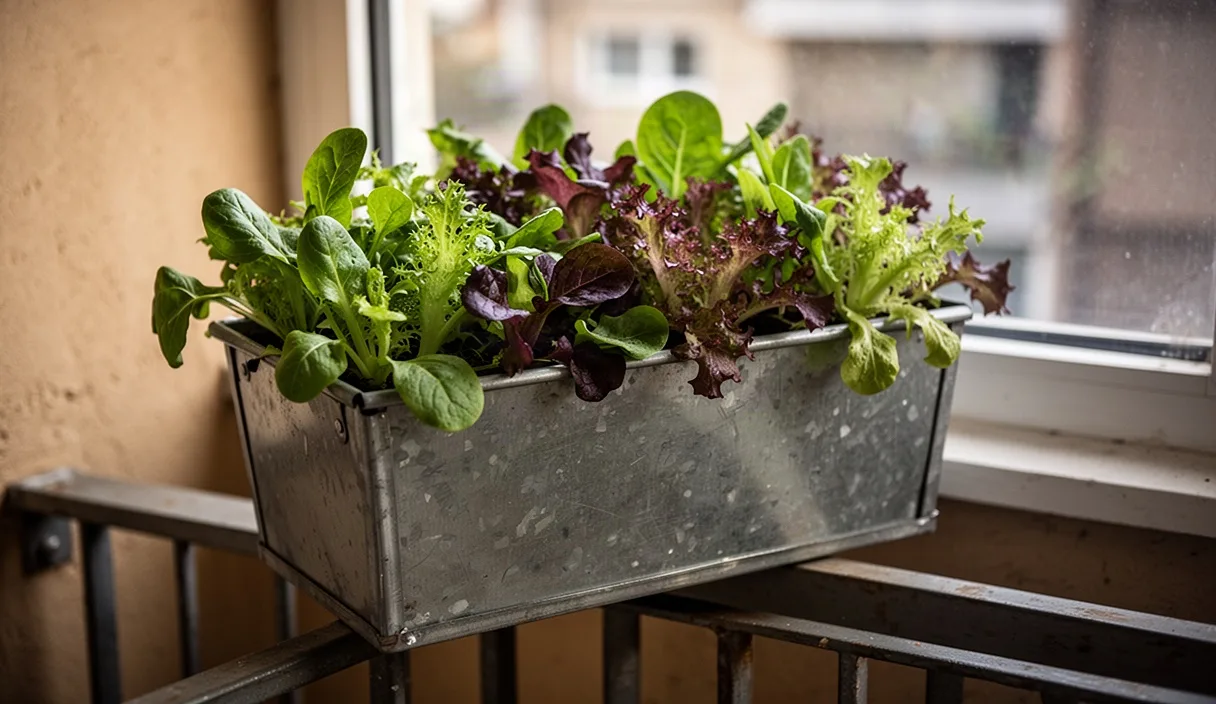
You will discover hardy salad greens and brassicas that stay productive through chilly damp winter spells under cold glass. Learn how to manage ventilation and condensation so your crops do not succumb to rot.
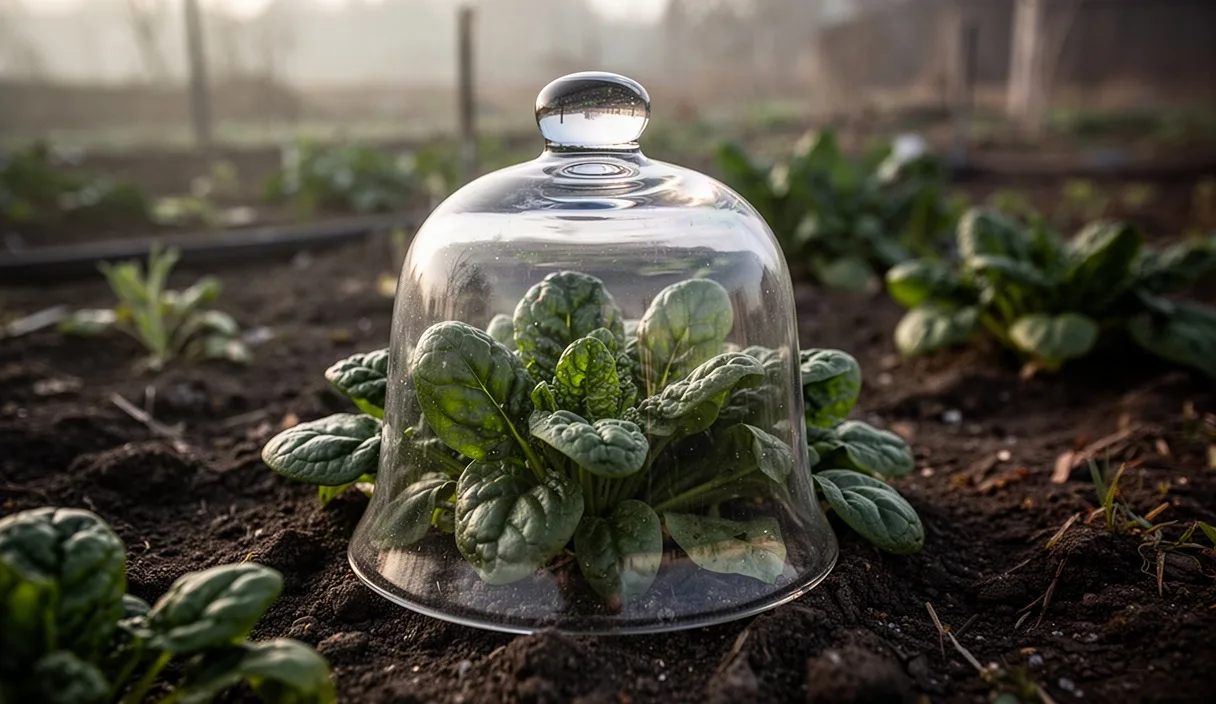

- Corn salad, land cress, and winter purslane maintain growth in sub-zero overnight temperatures.
- Prop cloches open on dry sunny winter mornings to vent excess condensation.
- Water sparingly at soil level on mild days to keep damp foliage from freezing.
Growing fresh salad greens through sub-zero weather sounds like wishful thinking until you look inside a working cloche in January. A modest tunnel or a row of glass panes does not heat the air like a greenhouse, but it breaks the wind, prevents soil compaction from driving rain, and keeps radiant warmth in the top few inches of topsoil. Beneath that simple cover, cold-tolerant leaves stop growing rapidly, yet they stay crisp, clean, and perfectly edible.
The secret lies in working with plant biology rather than fighting the weather. Winter greens naturally build up sugars and soluble proteins that act as internal antifreeze, protecting their cell walls from bursting when the mercury drops. When paired with an unheated glass or rigid plastic cloche, these hardy cultivars survive repeated freezes and provide a steady harvest right through the coldest stretch of the year.
Top cold-hardy salad varieties for unheated cloches
Not all greens tolerate freezing temperatures, even beneath a cloche. Tender butterheads and standard looseleaf lettuces turn to mush once the internal tissue freezes twice. Instead, you need species with low-growing rosettes, thick cell walls, and the biochemical ability to pump water out of their cells into intercellular spaces during hard frost. When the temperature rebounds by midday, those cells reabsorb the moisture without damage.
Corn salad, also known as lamb's lettuce or mache, sits at the top of the list. Varieties like 'Verte de Cambrai' and 'Vit' withstand temperatures down to -12 degrees Celsius without cover, and under a cloche they maintain pristine, glossy green leaves. Miner's lettuce (claytonia) thrives in low winter light and damp ground, producing succulent heart-shaped leaves that remain tender even when the ground crusts with frost. For a peppery bite, American upland cress and land cress outperform watercress and wild rocket during sustained cold spells.
Asian greens and brassicas round out the winter harvest. Tatsoi forms flat, spoon-shaped rosettes that hug the soil, ducking beneath cold drafts. Winter cultivars of spinach, such as 'Giant Winter' and 'Monstrueux de Viroflay', generate substantial foliage that sweetens noticeably after heavy frosts. The table below outlines how these varieties perform in cold microclimates.
| Crop Variety | Approximate Freeze Threshold | Growth Habit | Best Harvest Method |
|---|---|---|---|
| Corn Salad ('Vit') | -15 degrees Celsius | Low, dense rosette | Whole rosette or outer leaves |
| Miner's Lettuce (Claytonia) | -12 degrees Celsius | Sprawling groundcover | Cut-and-come-again stems |
| Land Cress | -10 degrees Celsius | Spreading rosette | Individual outer leaves |
| Tatsoi | -9 degrees Celsius | Prostrate rosette | Outer leaves or whole head |
| Winter Spinach ('Giant Winter') | -11 degrees Celsius | Upright to spreading | Mature outer foliage |
Timing late autumn sowings to establish root systems before freezing weather
A cloche can protect an established root system, but it cannot coax young seedlings into making rapid root growth when day length falls below ten hours. This threshold, often called the Persephone period, slows biological activity to an absolute crawl. If your plants enter this low-light window as tiny sprouts, they will stay tiny sprouts until February. Your sowings must happen early enough for the plants to reach roughly 75 percent of their mature size before the light fades.
In most temperate regions, the ideal sowing window falls between late August and early October. Fast-growing greens like radishes and land cress can go into the ground toward the tail end of September. Slower crops like corn salad and winter spinach need early to mid-September sowings so they can build deep taproots. Soil temperature at sowing should ideally sit between 12 and 18 degrees Celsius to guarantee rapid germination and even emergence.
You can seed directly into the bed where the cloche will rest, or you can start seeds in module trays in late summer and transplant them under the covers in October. Module planting gives you total control over moisture and keeps tender seedlings away from garden pests during their vulnerable first three weeks. When transplanting, bury the root plug level with the soil surface and firm the soil gently around the stem to eliminate air pockets that might freeze solid later.
Positioning glass and plastic cloches for maximum low-angle winter sunlight
In the depths of winter, the sun rides low on the horizon, casting elongated shadows and offering weak solar radiation. Every degree of tilt and every directional adjustment changes how much energy enters the cloche. Position your cloche rows along an east-west axis, with the broad, sloping side facing directly south. This orientation captures the midday sun at its steepest available angle, warming the soil beneath the cover by several degrees relative to the open garden.
Keep a close eye on structural shadows. A fence, shed, or evergreen hedge that sits well clear of your beds in June can cast total shade over a winter bed from November through January. Place your cloches in the most open, unshaded quarter of your plot. If you garden on a slight slope, an incline facing south or southeast drains cold air downhill, preventing frost pockets from pooling around the base of the structures.
The material of your cloche also dictates how light and heat move through the space:
- Traditional glass: Exceptional light transmission that does not degrade over time, high thermal mass, and heavy enough to resist moderate winds without anchoring pins. Glass drops heat quickly once the sun sets.
- Twin-wall polycarbonate: Provides superior insulation due to the trapped air channels inside the plastic, buffering against sudden overnight freezes, though it admits slightly less total light than clear glass.
- Corrugated PVC or polyethylene: Inexpensive and flexible, but prone to blowing away unless pegged securely into the soil. These materials lose heat rapidly at night and can become brittle in sustained sub-zero temperatures.
Managing moisture and condensation under closed covers
Winter cloches trap moisture evaporating from the soil and transpiring from plant leaves. When warm, humid air inside hits the cold glass or plastic walls, it condenses into water droplets. If left unmanaged, heavy condensation drips constantly onto the foliage below, creating the exact cold, stagnant, saturated environment where grey mould (Botrytis cinerea) thrives. Damp leaves in freezing weather are far more prone to cellular collapse than dry leaves.
Ventilation is your main tool for keeping winter crops healthy. On any calm day when the ambient air rises above 3 or 4 degrees Celsius, prop open the ends of your cloches or lift the lids by two to three inches. This encourages gentle air exchange that carries away excess humidity without shocking the plants. Close the covers again by mid-afternoon, roughly an hour before sunset, to trap the residual warmth of the day inside the soil.
Watering requires extreme restraint between November and February. The soil under a closed cloche loses very little moisture to evaporation. In most gardens, a deep soaking at the time of autumn planting, followed by natural ground moisture creeping in from the perimeter, provides all the water the plants need for weeks. Check the soil three inches down; only add water if it feels powdery and dry to the touch. When you must water, apply it directly to the ground between rows using a long-spouted can, keeping the leaves completely dry.
Protecting cloche bases against slug damage in damp weather
Slugs do not vanish when winter arrives; they simply slow down and hunt closer to shelter. A cloche provides the perfect winter refuge for them, offering shelter from drying winds and a buffet of tender leaves. Because cloches keep the soil surface softer and slightly warmer than the surrounding open ground, slugs often migrate straight into the protected zone, hiding around the interior baseboards or beneath the edges of the frame during the day.
Securing the perimeter forms your first line of defense. Clear a bare margin of at least six inches around the outside of the cloche, removing dead leaves, mulch, and weeds where pests take cover. Press the bottom edge of rigid cloches an inch deep into the soil to block ground-level gaps, or bank a shallow ridge of coarse builder's sand along the outer rim. Slugs dislike crawling over sharp, gritty materials, especially when the weather is cold and their slime production is sluggish.
Inside the cloche, set up simple mechanical controls before severe frosts set in:
- Lay flat pieces of untreated timber or scrap tile between the crop rows to serve as daytime collection boards, checking underneath them twice a week to remove resting slugs by hand.
- Bury small sunken containers filled with yeasty water or beer, leaving the rim half an inch above the soil line to catch foraging slugs while preventing beneficial ground beetles from falling in.
- If using commercial bait, select ferric phosphate pellets rather than metaldehyde options, applying them sparingly along the interior edges rather than scattering them over the crop foliage.
- Inspect the lower, decaying leaves of the plants regularly; removing yellowing foliage deprives slugs of an easy initial food source and improves air circulation.
Harvesting cold leaves safely without tearing frosted tissues
Harvesting greens in winter requires patience and a gentle touch. When the air drops below freezing, ice crystals form inside the extracellular spaces of the leaves, making the stems and foliage stiff, brittle, and translucent. If you cut, bend, or pull a frozen leaf, those ice crystals slice through the cell walls like microscopic glass shards. The damaged tissue will turn black, water-soaked, and unusable within an hour of thawing.
Never pick your greens early in the morning during a frost. Wait until the sun has struck the cloche and raised the internal temperature enough for the foliage to thaw naturally. You can tell a leaf has fully thawed when it loses its stiff, glassy appearance, recovers its normal matte color, and flexes easily when nudged with a fingertip. This transition often happens by late morning or early afternoon, even on days when the outside air remains brisk.
Use a clean, very sharp pair of harvesting shears or a curved harvest knife rather than tearing leaves away with your fingers. Dull blades crush the vascular tubes at the base of the petiole, creating an open wound that invites rot under damp glass. Cut individual outer leaves roughly half an inch above the plant's crown, leaving the growing center intact. This preserves the plant's energy reserves so it can push out a flush of tender new growth as soon as daylight increases in late winter.
Common winter cloche mistakes
Gardeners often run into trouble by treating winter cloches like summer beds. The most frequent errors stem from doing too much rather than letting the plants sit in quiet dormancy:
- Over-fertilizing in late autumn: Applying high-nitrogen feeds late in the season encourages soft, sappy growth that freezes readily. Plants need tough, fibrous leaves to endure low temperatures.
- Leaving cloches sealed on sunny days: Solar radiation can push the internal temperature of a closed cloche past 20 degrees Celsius even in January. This sudden heat spike confuses the plants, breaks their dormancy, and leads to heat stress followed by freezing shock that night.
- Overcrowding the rows: Dense plantings restrict airflow and trap dampness around the base of the stems, making botrytis almost inevitable by mid-winter. Thin greens to wider spacings than you would use in spring.
- Walking on frozen beds: Treading on soil near the base of your cloches when the ground is frozen compacts the soil structure and shears off delicate roots running beneath the surface. Use dedicated wooden boards to distribute your weight.
Practical next steps for your winter patch
To get started, evaluate your garden beds this week to map out the spot that receives the clearest exposure to low winter sun. Check your existing cloche hardware for loose panes, cracked clips, or torn covers, and scrub the panels clean of algae and dust so every scrap of winter light can penetrate the interior.
Pick two or three reliable varieties, such as corn salad and winter purslane, and prepare a firm, finely raked seedbed enriched with a light dressing of mature garden compost. Mark your calendar for late-summer sowing dates, or order your seeds well ahead of time to avoid supply shortages. If you manage chronic pest issues or localized soil diseases, consult a regional agricultural extension officer or a certified agronomist for guidance tailored to your specific microclimate and soil profile.
This publication provides general horticultural advice for home gardeners; consult a professional agronomist or arborist for commercial crops or structural tree safety. Disclaimer